Carnivore Diet: Who It Helps (And Who It Doesn't)
4 min read
The carnivore diet tends to trigger strong reactions.
Some people describe it as life-changing. Others see it as unnecessary or extreme. As usual in nutrition, the reality is more nuanced than either side admits.
To understand where carnivore fits, it helps to step away from food ideology and look at the body through a metabolic lens. What matters most isn’t whether plants are included or excluded, but how the diet affects fuel use, insulin regulation, and overall energy balance.
At MetaFuel, carnivore isn’t treated as a belief system. It’s treated as a tool.
What the Carnivore Diet Really Is
At its core, the carnivore diet is a very simple way of eating. It focuses almost entirely on animal-based foods such as meat, fish, eggs, and sometimes dairy, while removing plant foods and carbohydrates.
This simplicity is often misunderstood. Carnivore isn’t about chasing meat for its own sake. From a metabolic perspective, it’s about removing carbohydrates almost entirely, which changes how the body produces energy.
When carbohydrates disappear, glucose becomes scarce, insulin levels fall, and the body is pushed to rely more heavily on fat as fuel. That shift is where most of the metabolic effects come from.
Why Carnivore Can Improve Metabolic Health
For people who struggle with energy crashes, cravings, or stubborn fat loss, carnivore can feel surprisingly effective.
The reason isn’t magic. It’s metabolic context.
Many people today are metabolically inflexible. Their bodies rely almost exclusively on glucose and struggle to access stored fat. Frequent eating, refined carbohydrates, and constant insulin release reinforce that pattern over time.
Carnivore interrupts it.
By removing carbohydrates, blood sugar swings become smaller, insulin stays lower, and the body is forced to relearn how to burn fat. For some people, this leads to steadier energy, reduced hunger, and a sense that their metabolism has “calmed down.”
In that sense, carnivore often functions as a reset, not a destination.
The Power of Simplicity
One of the most underrated aspects of carnivore is how simple it is.
With fewer foods to choose from, appetite cues often become clearer. Overeating becomes harder. Decision fatigue disappears. Many people find that they stop thinking about food altogether for the first time in years.
This matters metabolically. Less constant eating means insulin stays lower for longer periods. The body gets time to access stored fuel instead of constantly waiting for the next meal.
Simplicity alone can drive meaningful improvements, especially for people coming from highly processed diets.
Where Carnivore Can Become a Problem
Despite its benefits, carnivore isn’t automatically the right choice for everyone.
Some people struggle with the lack of variety. Others find it socially isolating or mentally rigid. There can also be challenges during adaptation, such as low energy, electrolyte imbalances, or digestive changes if protein and fat intake aren’t well balanced.
These issues don’t mean carnivore is harmful, but they do mean it requires context and self-awareness. A diet that improves metabolic health but creates stress or rigidity may not be sustainable long term.
Carnivore Compared to Other Low-Carb Approaches
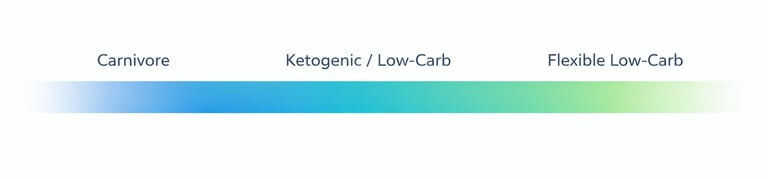
From a metabolic standpoint, carnivore sits at one end of a spectrum.
Low-carb and ketogenic diets reduce carbohydrates without eliminating them entirely. More flexible approaches allow selective carbohydrate use while still controlling insulin spikes.
All of these strategies can improve metabolic health when used appropriately. The difference is not which one is “right,” but which one fits a person’s current metabolic state, lifestyle, and training demands.
Carnivore tends to work best as a temporary intervention or structured phase, especially for people who feel overwhelmed by complexity.
Carnivore and Physical Activity
Fuel needs change with movement.
Carnivore diets often pair well with strength training, walking, and lower-intensity activity. These forms of movement rely heavily on fat as fuel and benefit from stable energy availability.
High-intensity endurance training, on the other hand, places greater demands on glucose. Some people adapt well to this on carnivore, while others feel flat or underpowered.
This doesn’t make carnivore good or bad. It simply highlights an important principle: fuel strategy should match energy demand.
Who Carnivore Tends to Help Most
Carnivore often helps people who feel metabolically stuck. Those with strong cravings, energy instability, or difficulty regulating appetite may benefit from its structure and metabolic effects.
It can also serve as a diagnostic tool. Removing variables can reveal how much of a person’s struggle is driven by carbohydrate tolerance versus other factors like sleep, stress, or training.
Used this way, carnivore becomes informative rather than ideological.
Who Should Approach With Caution
People who already have stable energy, good insulin sensitivity, and enjoy dietary variety may gain little from full carnivore. Those prone to rigid thinking around food may also find it counterproductive.
Metabolic health does not require eliminating carbohydrates forever. Flexibility, not restriction, is the long-term goal.
The MetaFuel Perspective
Carnivore isn’t something to praise or fear.
It’s one way—among several—to reduce glucose dependence, lower insulin demand, and simplify fuel use. For some people, that’s exactly what’s needed, at least for a period of time.
For others, a less restrictive approach works just as well.
The goal isn’t to stay carnivore. The goal is to restore metabolic flexibility and energy stability.
What’s Next
In the the next suggested article (for you - the person reading to this point) , we’ll move beyond diet and look at a factor that shapes metabolism more than most people realize:
Why Strength Training Is Non-Negotiable for a Healthy Metabolism
Because food is only part of the equation.
MetaFuel takeaway: Carnivore is a tool. Metabolic health is the outcome.