Fat vs. Glucose: How Your Body Chooses Its Fuel (And Why It Matters More Than Calories)
5/8/20243 min read
Calories tell you how much energy food contains.
They don’t tell you how your body will use that energy.
That’s where most nutrition advice goes wrong.
Your body doesn’t just “burn calories.” It chooses between fuels—and that choice affects your energy, hunger, fat storage, and long-term metabolic health far more than calorie math ever could.
To understand metabolism, you need to understand fat vs. glucose.
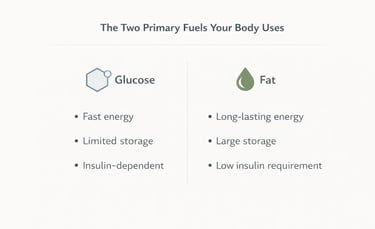
The Two Primary Fuels Your Body Uses
Your body runs mainly on two fuels:
Glucose (from carbohydrates, sugar etc...)
Fat (from dietary fat and body fat)
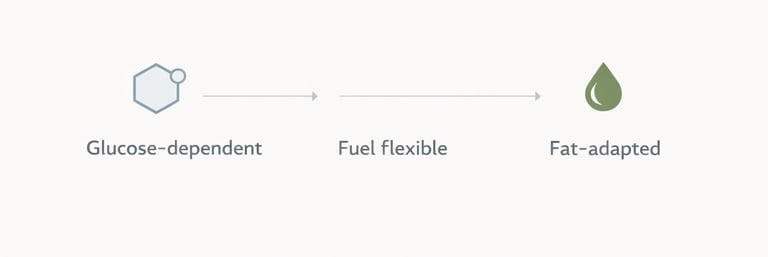
Both are useful. Neither is “bad.” Problems arise when the body becomes overly dependent on one and loses flexibility.
A healthy metabolism can shift between fuels depending on availability, activity, and demand.
How Glucose Works as Fuel
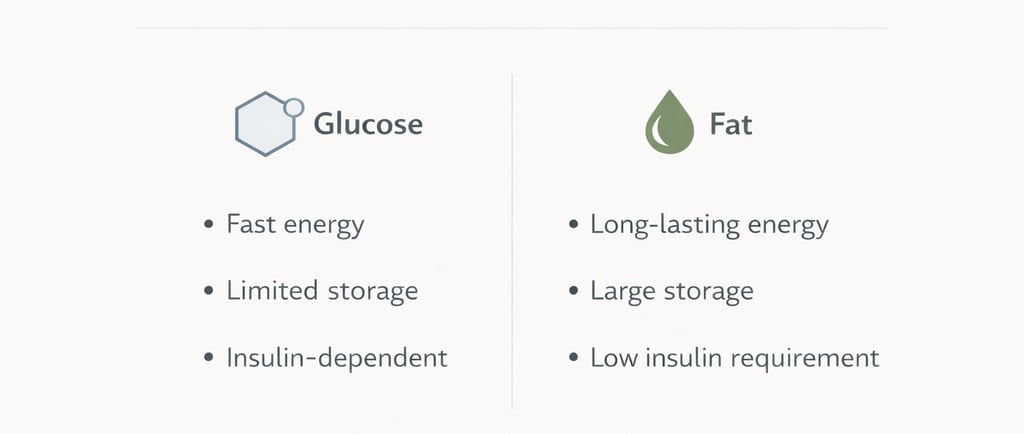
Glucose is quick energy.
When you eat carbohydrates:
Blood sugar rises
Insulin is released
Glucose is used or stored
Advantages of glucose:
Fast energy
Useful for intense or explosive activity
Easy to access
Limitations:
Limited storage
Frequent replenishment required
Repeated spikes can lead to insulin resistance
Glucose works best when it’s used intentionally—not constantly.
How Fat Works as Fuel
Fat is long-term energy.
It comes from:
Dietary fat
Stored body fat
Advantages of fat:
Huge energy reserves
Stable, steady fuel
Minimal insulin required
Limitations:
Takes time to adapt to using efficiently
Less effective for maximal sprint-type efforts
Fat is the body’s preferred fuel at rest, during low-intensity movement, and between meals—when the metabolism is healthy.
How Your Body Chooses Between Fat and Glucose
The fuel choice is not random.
It’s influenced by:
Recent meals
Insulin levels
Activity type
Muscle mass
Metabolic health
The most important regulator is insulin.
High insulin → glucose use, fat storage
Low insulin → fat access, fat burning
This is why eating frequency, food type, and meal timing matter so much.
What Metabolic Inflexibility Looks Like
When the body struggles to switch fuels, problems appear.
Common signs include:
Energy crashes between meals
Strong carb and sugar cravings
Difficulty accessing body fat
Feeling “wired but tired”
Needing constant snacks
This state is often called metabolic inflexibility—the body is stuck relying on glucose even when fat is available.
Again, this isn’t a willpower issue. It’s a fuel-use issue.
Why Calories Alone Miss the Point
Two meals with the same calories can have completely different effects on metabolism.
For example:
One meal causes large glucose spikes and insulin release
Another provides steady energy with minimal insulin response
Same calories. Very different metabolic outcomes.
Calories matter—but context matters more.
Where Low-Carb, Keto, and Carnivore Fit
Low-carb and carnivore approaches reduce incoming glucose and insulin demand.
For many people, this:
Restores access to fat as fuel
Stabilizes energy
Reduces cravings
Improves metabolic markers
This doesn’t mean carbs are universally bad. It means some metabolisms need a break from constant glucose exposure.
At MetaFuel, these approaches are viewed as strategic tools, not permanent rules.
Exercise Changes Fuel Use More Than Diet Alone
Movement strongly influences fuel choice.
Strength training improves insulin sensitivity
Low-intensity movement favors fat use
High-intensity efforts rely more on glucose
Muscle acts like a metabolic buffer—it absorbs glucose and improves fuel handling even at rest.
This is why training matters regardless of diet.
How to Improve Fuel Flexibility (Practically)
You don’t need extreme protocols to improve fuel use.
Start with:
Protein-forward meals (don't neglect fat)
Strength training 2–3× per week
Longer gaps between meals (intermediate fasting)
Consistent sleep timing
These signals teach the body that it’s safe to access stored energy again- yes, that stubborn belly fat that you are trying to fight but it wins you over every single time!
The MetaFuel Perspective
Fat vs. glucose is not a debate. It’s a balance.
A healthy metabolism:
Can use glucose when needed
Can rely on fat when appropriate
Isn’t locked into one mode
The goal isn’t restriction. It’s flexibility.
Understanding how your body chooses fuel gives you leverage—and that leverage makes everything else easier.
What’s Next
In the next article we suggest you reading, we’ll look at why muscle plays such a critical role in metabolism—and why strength training is one of the most powerful tools for improving fuel use.
MetaFuel takeaway:
Metabolic health isn’t about burning more. It’s about choosing better.