Fiber for Brain Fog: Why "Fibermaxxing" Works for Focus
4 min read
You know the feeling. It's 2 PM, you're sitting at your desk after lunch, and your brain feels like it's running through molasses. You can't focus, words blur together, and all you want to do is close your eyes. This is brain fog, and it's almost always caused by one thing: blood sugar chaos.
You've heard it since you were five years old: "Eat your vegetables." It's the classic, boring advice that usually ends up ignored in favor of something that actually tastes good. But in 2026, a new term is taking over the biohacking world that makes this advice actually useful: Fibermaxxing.
And no, this isn't about "staying regular" or choking down your grandmother's sawdust-flavored bran muffins. This is about cognitive performance.
Fibermaxxing is about treating fiber as a biological technology—a high-performance "speed controller" for your brain's fuel tank. If you've ever felt that mid-afternoon mental collapse after a bowl of pasta or a sandwich, fiber is the missing piece that prevents the crash.
The Science: Building a "Molecular Mesh"
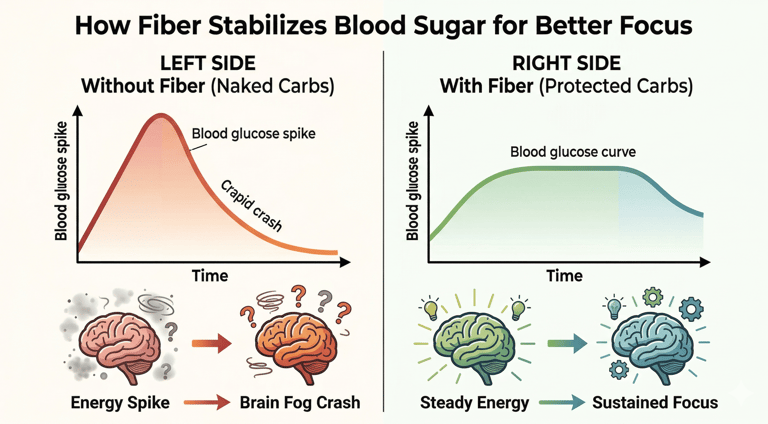
Think of your small intestine as a high-speed highway for nutrients. When you eat "naked carbs" (sugar, white bread, processed snacks), they hit that highway like a fleet of sports cars with no speed limits. Your blood sugar spikes, your insulin panics, and your brain eventually pays the price with a massive energy dip.
Fibermaxxing changes the road conditions.
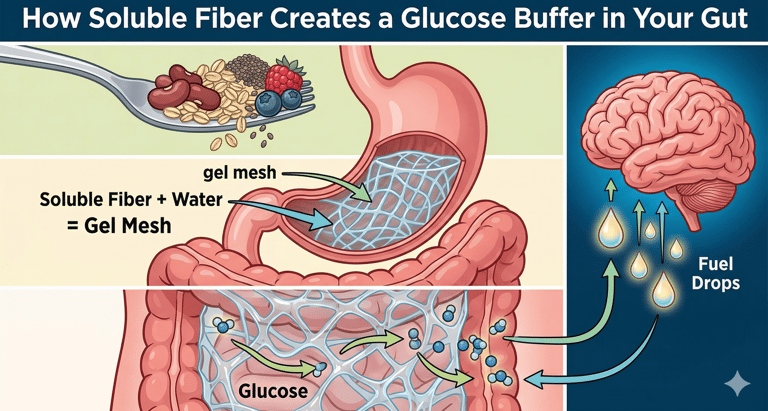
When you eat soluble fiber (the kind in beans, oats, and chia seeds), it mixes with water in your gut and creates a thick, gel-like mesh - think of it like a net that catches speeding sugar molecules and forces them to slow down. Instead of hitting your bloodstream all at once, they trickle in at a manageable pace.
Instead of a jagged spike and crash, you get a steady-drip energy flow. Your brain stays online because its fuel supply is finally consistent.
Why Your Brain Craves a "Fiber Buffer"
Your brain is an energy hog, but it's also a bit of a diva—it hates drama. It performs best when glucose levels are as flat as a calm lake.
When you "fibermaxx" your meals, you are essentially installing a glucose buffer. This eliminates the mental sluggishness of brain fog and prevents the irritability—or "hangry" spikes—that happen when your fuel levels bottom out. Stable fuel equals stable focus, sharper thinking, and consistent mental clarity throughout the day.
The MetaFuel Protocol: How to Fibermaxx
You don't need to live on kale salads to see results. You just need to be strategic about your "fiber bodyguards".
The "Bodyguard" Rule: Never let a carb travel alone. If you're having oatmeal, add a tablespoon of chia seeds. If you're having a sandwich, load it with sprouts or have a side of berries. The fiber protects you from the carb's blood sugar spike.
The Order Matters: This is a pro-move. If you eat your fiber (like a small starter salad or some broccoli) before the rest of your meal, you've already set up the "mesh" in your gut before the heavy hitters arrive. Real-world example: If you're having a burrito bowl for lunch, eat the beans and veggies first, then the rice. This simple order change can cut your post-meal blood sugar spike by up to 30%, which translates directly to fewer afternoon brain fog episodes.
Whole Over Processed: While 2026 is full of fiber powders, "intact" fiber from whole foods like lentils, raspberries, and avocados works better because the fiber is still trapped in its natural cellular structure. Your body has to work to break it down, which means even slower, steadier glucose release.
Quick Fiber Wins for Immediate Results
Start with these three changes today:
Morning: Add 1 tablespoon of chia seeds to your oatmeal or yogurt. This adds 5g of fiber and creates an instant glucose buffer that'll keep your brain sharp through your morning meetings.
Lunch: Eat a small side salad or some raw veggies before your main meal. The fiber sets up the "mesh" before carbs arrive, dramatically reducing the post-lunch energy crash.
Snack: Swap chips for hummus with veggies. You go from 2g of fiber to 14g, which makes a massive difference in blood sugar stability and mental clarity for the rest of your afternoon.
The Taste Problem (And How to Fix It)
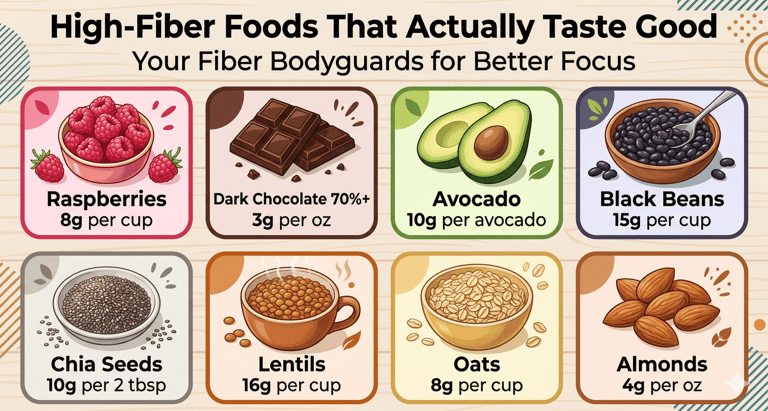
Let's be honest: bran cereal tastes like cardboard, and nobody wants to live on lentils alone. But fiber-rich foods don't have to be boring. Raspberries, dark chocolate (yes, really - 70%+ cacao has 3g fiber per ounce), avocado toast, and black bean tacos all pack serious fiber while actually tasting good. The trick is finding your "fiber vehicles" - foods you genuinely enjoy that happen to be fiber-rich.
Avoiding the "Fiber-Crash"
A word of warning for the overachievers: don't go from zero to sixty in one day. If your gut isn't used to high fiber, a sudden "maxxing" phase can lead to bloating and discomfort that'll make you want to quit before you see the cognitive benefits.
The trick is to scale up slowly—add one high-fiber food every few days—and hydrate aggressively. Fiber is like a sponge; it needs water to create that protective gel mesh. Without water, it's just creating traffic jams in your digestive highway. Aim for an extra 8-16 oz of water for every 10g of fiber you add.
The MetaFuel Perspective
At MetaFuel, we don't look at food as "good" or "bad." We look at it as a fuel system. Fiber isn't a "diet food"—it is a performance-enhancing technology that keeps your cognitive engine running smoothly.
By building a resilient glucose buffer through fibermaxxing, you aren't just eating better; you're ensuring that your brain has the steady, reliable power it needs to do its best work. No more 2 PM crashes. No more brain fog that makes simple tasks feel impossible. Just consistent, reliable mental clarity from morning to night.
Your brain doesn't need more fuel—it needs steadier fuel. That's what fiber delivers.