Why Do I Get Brain Fog After Eating? | MetaFuel
5 min read
You finish a meal and instead of feeling fueled and focused… your brain feels like it's wrapped in cotton. Thoughts move slower, words don't come as easily, and concentration feels like pushing through mud. Maybe you struggle to stay present in a meeting, or you find yourself reading the same sentence three times. This isn't just tiredness — it's brain fog. And if it happens consistently after eating, your body is trying to tell you something about how it's managing fuel. The good news? It's usually fixable once you understand what's actually happening.
What "Brain Fog After Eating" Feels Like (And What It Isn't)
Brain fog isn't the same as feeling pleasantly full or a little sleepy after a good meal. It's a specific kind of mental sluggishness where your cognitive gears feel sticky. You might have trouble concentrating, feel like you're thinking through molasses, or struggle to find the right words in conversation. Some people describe it as feeling "spaced out" or like their brain just went offline. It's not laziness, and it's not a character flaw — it's a signal that something about how your body is processing energy isn't going smoothly. Most people experience this occasionally, but if it's happening regularly after meals, the pattern matters more than the occasional off day.
The Most Common Driver: Blood Sugar Swings and Fast-Digesting Carbs
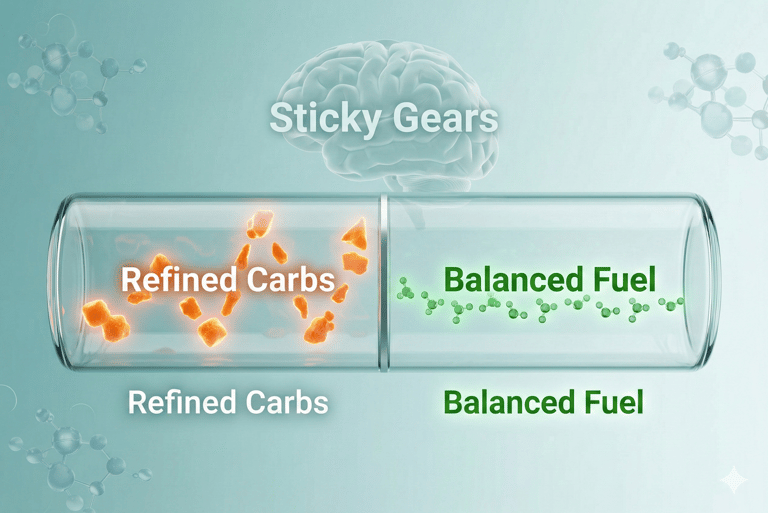
Here's what usually happens: You eat a meal, especially one heavy on refined carbs, and your blood sugar shoots up quickly. Your body releases insulin to bring it back down. But sometimes that process isn't gentle — it's more like slamming on the brakes. When blood sugar drops sharply or overshoots the target, your brain feels it immediately. Your brain runs almost entirely on glucose, so when those levels swing around, cognitive function follows right along for the ride. This is why meals built mostly around fast-digesting carbs — bagels, pasta, white bread, sugary snacks — without protein or fiber to slow things down can leave you mentally foggy 30-60 minutes later. It's basically the mental version of a carb crash, where your energy tanks and your brain goes with it.
Reactive Hypoglycemia: When a Post-Meal Drop Happens Hours Later
Some people don't get brain fog right after eating — they feel fine for an hour or two, then suddenly hit a cognitive wall. This pattern is called reactive hypoglycemia, and it's sneaky. What happens is your meal causes a blood sugar spike, insulin responds (sometimes overresponds), and a few hours later your glucose drops below where it started. That dip can bring brain fog, confusion, shakiness, or weakness. It's more common after high-carb meals, and it's not the same thing as diabetes — it's just your body overcorrecting. The key sign is the delay: you eat at noon, feel fine, then at 2 or 3 PM your brain completely checks out.
"Food Coma" vs Brain Fog: Digestion Load and Sleepiness
Let's clear something up: "food coma" and brain fog aren't exactly the same thing, though they can happen together. Food coma (the fancy term is postprandial somnolence) is that normal, mild drowsiness you get after eating — especially after a big meal. Your body is redirecting blood flow and energy toward digestion, which can make you feel a bit sleepy. That's pretty normal. Brain fog is different — it's not just tiredness, it's cognitive impairment. You're not just relaxed, you're struggling to think clearly. Large, heavy meals — especially ones that are high-carb and high-fat — require more digestive work, which can amplify the effect. Add in eating too fast or while stressed, and digestion becomes even harder. When this happens on top of blood sugar swings, the brain fog hits harder.
Food Sensitivities and Inflammation Patterns (How to Think About Them)
Some people notice brain fog consistently after eating specific foods — gluten, dairy, eggs, or other common triggers. This is different from a food allergy, which would cause immediate and severe reactions. Food sensitivities are more subtle and can involve low-grade inflammation that affects how your brain functions. But here's the thing: not everyone has food sensitivities, and you shouldn't assume this is the cause right away. The smarter approach is to pay attention to patterns. Does this happen after all meals, or just meals with certain ingredients? An elimination diet can help you figure this out, but it should be done thoughtfully, not out of panic. For most people, brain fog is more about how they eat (big carb-heavy meals, eating too fast, inconsistent meal timing) than what they eat.
Why Sleep Loss and Stress Amplify Post-Meal Fog
If you've noticed that brain fog after eating is way worse on days when you didn't sleep well or when you're stressed out — you're not imagining it. Poor sleep reduces your body's ability to regulate blood sugar efficiently, which means your brain becomes more vulnerable to glucose swings after meals. When you're sleep-deprived, even a normal meal can feel like it scrambles your thinking. The same goes for stress — chronic stress keeps stress hormones like cortisol elevated, which messes with blood sugar stability. So your metabolic state before you eat matters just as much as what's on your plate.
A well-rested, less-stressed system can handle the same meal way more smoothly than an exhausted, wired one.
Simple Stabilization Strategy: Design Meals for Steady Energy
You don't need to adopt some extreme diet or eliminate entire food groups. Most people just need to make small structural shifts that promote steadier energy.
Combine protein, fiber, and carbs in your meals — this slows digestion and prevents sharp glucose spikes.
Avoid meals that are almost entirely refined carbs with no protein or fat to balance them out.
Don't skip meals if you're prone to brain fog, because irregular eating makes blood sugar regulation harder.
Eat in a calm state when possible — stress during meals affects digestion and glucose handling.
Stay hydrated, because even mild dehydration can worsen cognitive symptoms.
Consider meal size — sometimes very large meals just overwhelm your system.
And if you want long-term improvement, build muscle through strength training, because muscle dramatically improves how your body handles glucose. The goal isn't perfection or restriction — it's creating predictable, stable energy so your brain can actually function.
When to Get Checked (Red Flags and Persistence)
Occasional brain fog after a heavy meal is pretty common and usually not a big deal. But if brain fog happens after every meal, is severe, or comes with other concerning symptoms, it's worth getting checked out by a professional. Red flags include confusion that doesn't clear quickly, vision changes, severe dizziness, numbness, or slurred speech — these need immediate medical attention. Persistent brain fog despite making dietary changes could point to blood sugar disorders, thyroid issues, nutrient deficiencies, or other conditions that need proper testing. Don't self-diagnose serious stuff, but also don't ignore patterns that keep showing up. A healthcare provider can run the right tests and give you actual answers instead of guesses.
The MetaFuel Perspective
Brain fog after eating isn't something you just have to live with, and it's not a sign that your brain is broken. It's feedback — your body telling you that energy isn't flowing smoothly. When your system manages fuel in a stable, flexible way, mental clarity follows naturally. Most of the time, small adjustments to meal composition, timing, sleep, and stress create meaningful shifts. The goal isn't to fight the fog or ignore it — it's to understand what's causing it and give your body what it actually needs. Your brain doesn't just need fuel — it needs steady fuel. Support that stability, and the fog usually lifts.