Always Hungry? Here’s Why
3 min read
You eat.
You wait.
And somehow… you’re hungry again.
Maybe it happens an hour later. Maybe even sooner. Maybe you feel hungry while finishing a meal.
It can be frustrating — especially if you’re trying to “eat well” or stay consistent.
But constant hunger is rarely random.
It’s usually a signal.
And like most metabolic signals, it makes more sense once you understand what your body is responding to.
Hunger Is a Signal — Not a Character Flaw
Before anything else, this matters:
Hunger is not a lack of willpower.
It’s a biological message.
Your brain constantly monitors energy availability, hormone levels, stress signals, sleep quality, and blood sugar. When something feels unstable, it adjusts appetite accordingly.
Sometimes hunger means:
You genuinely need fuel
Your last meal didn’t satisfy certain signals
Your blood sugar shifted quickly
Your stress or sleep patterns changed
The key isn’t suppressing hunger. It’s understanding it.
Blood Sugar Swings Can Make You Hungry Again Quickly
One of the most common reasons people feel hungry shortly after eating is rapid blood sugar fluctuation.
Here’s what can happen:
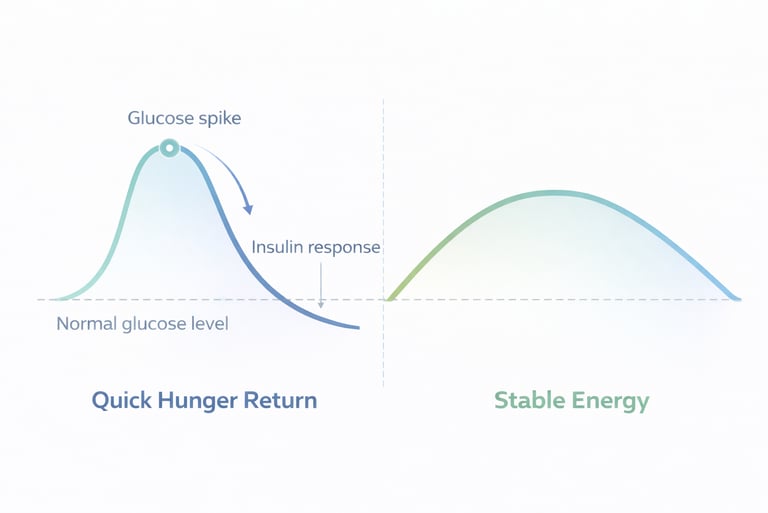
You eat a meal high in fast-digesting carbohydrates.
Glucose rises quickly.
Insulin rises quickly.
Blood sugar drops quickly.
When blood sugar drops rapidly, the brain interprets that as a potential energy shortage — even if you consumed enough calories.
Result?
Hunger returns. Sometimes strongly.
This is closely connected to what people experience as a carb crash — energy and appetite instability often travel together.
Your metabolism prefers steady fuel delivery. Sharp swings trigger protective responses.
Low Protein Intake Reduces Satiety Signals
Protein is uniquely powerful when it comes to fullness.
It stimulates satiety hormones and slows digestion. Meals very low in protein often digest quickly, leaving you physiologically under-signaled — even if you ate enough calories.
You may feel:
physically full
but not satisfied
That distinction really matters.
Satisfaction involves hormonal messaging, not just stomach volume.
If you’re always hungry even after eating, evaluate whether your meals contain meaningful protein — not just carbohydrates or fats alone.
Sleep Deprivation Increases Hunger Hormones
If you’ve ever noticed stronger appetite after poor sleep, that’s not imagination.
Sleep influences two key appetite regulators:
Ghrelin (stimulates hunger)
Leptin (signals fullness)
Short or disrupted sleep tends to increase hunger signaling while reducing satiety cues.
A tired nervous system often asks for more energy. Which makes sense from a survival perspective.
But if sleep remains inconsistent, appetite can feel difficult to regulate.
A stable metabolism begins with stable recovery.
Stress Can Drive Constant Hunger
Stress isn’t just mental — it’s metabolic.
When stress hormones remain elevated, the body often keeps energy more available in the bloodstream. Over time, this can disrupt normal appetite regulation.
Stress can:
Increase cravings
Make hunger feel urgent
Reduce sensitivity to fullness
The nervous system under pressure tends to prioritize quick energy.
Your body isn’t sabotaging you. It’s preparing you.
The problem is when that preparation becomes constant.
Is It Just a “Fast Metabolism”?
People often assume constant hunger means they have a fast metabolism.
Sometimes that’s true — especially in very active individuals or during growth phases.
But more often, persistent hunger reflects instability rather than speed.
A metabolically flexible system doesn’t panic between meals. It shifts smoothly between stored fuel and incoming fuel.
If hunger feels urgent, frequent, and unpredictable, the issue is often fuel regulation — not metabolic speed.
Meals That Don’t Stabilize Energy
Some meals are filling in the short term but destabilizing long term.
For example:
High-carb, low-protein breakfasts
Refined snacks without fiber
Liquid calories
Meals eaten quickly under stress
These don’t necessarily “cause weight gain.” But they may cause energy and hunger volatility, and volatility tends to increase appetite.
Your metabolism is constantly trying to create stability. When it doesn’t find it, it asks for more input.
How to Feel Full Without Extreme Dieting
You don’t need extreme restriction to reduce constant hunger, In most cases, small structural adjustments help:
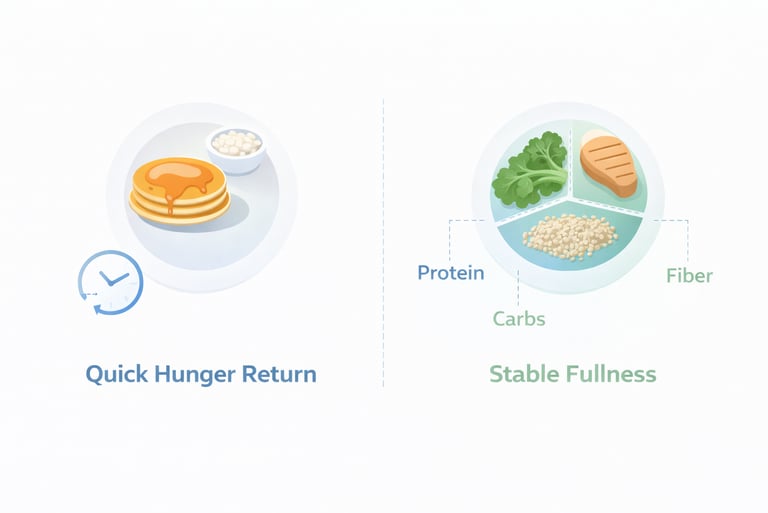
Combine protein, fiber, and carbs in meals
Eat in a calmer state (avoid rushed eating when possible)
Prioritize sleep
Reduce large glucose spikes
The goal isn’t suppressing hunger, It’s making it predictable.
When hunger follows a natural rhythm — rising gradually, resolving comfortably — metabolism is usually functioning well.
When to Look Deeper
If hunger feels excessive, paired with fatigue, dizziness, or other persistent symptoms, it’s worth exploring with a qualified professional.
Most of the time, though, constant hunger reflects modifiable patterns — not pathology.
Your body isn’t fighting you, It’s just responding.
The MetaFuel Perspective
Always being hungry isn’t a sign of weakness, It’s a sign that something in the energy system needs better coordination.
Metabolism thrives on stability — steady fuel, steady sleep, steady recovery, when those signals align, hunger becomes informative rather than overwhelming.
And that’s the difference between fighting your appetite… and understanding it.