Fibermaxxing: The Viral Gut Trend That Actually Has Science Behind It
TikTok has blessed us with some questionable health advice over the years. So when “fibermaxxing” started blowing up — influencers dramatically adding chia seeds to everything and raving about their “gut glow-ups” — it was reasonable to be skeptical.
Here’s the thing though: this time, the science actually backs them up.
Fiber isn’t new. But what researchers have figured out about how it works — specifically, how it talks to your gut bacteria and directly influences your metabolism — is genuinely fascinating. And most people are getting about half of what they need.
Let’s get into it.
What Even Is Fibermaxxing?
The name is exactly what it sounds like: maximizing your daily fiber intake. The “maxxing” trend (proteinmaxxing, sleepmaxxing, etc.) is basically TikTok’s way of saying “optimize this thing hard.” And fiber is having its moment.
But unlike some wellness trends that fall apart the moment you look at the research, fibermaxxing got a significant credibility boost in early 2026 when a coalition of endocrinologists and food standard agencies published the first official framework for certifying foods that naturally stimulate GLP-1 — the same metabolic hormone that Ozempic mimics artificially. Certain high-fiber foods actually trigger it naturally.
That’s not nothing. That’s actually kind of a big deal.
Why Your Gut Is the Center of Your Metabolism
Your gut isn’t just a food processing tube. It’s home to trillions of bacteria — collectively called your microbiome — and those bacteria have a direct line to your metabolism, your immune system, your blood sugar, post-meal brain fog, and even your mood and mental clarity.
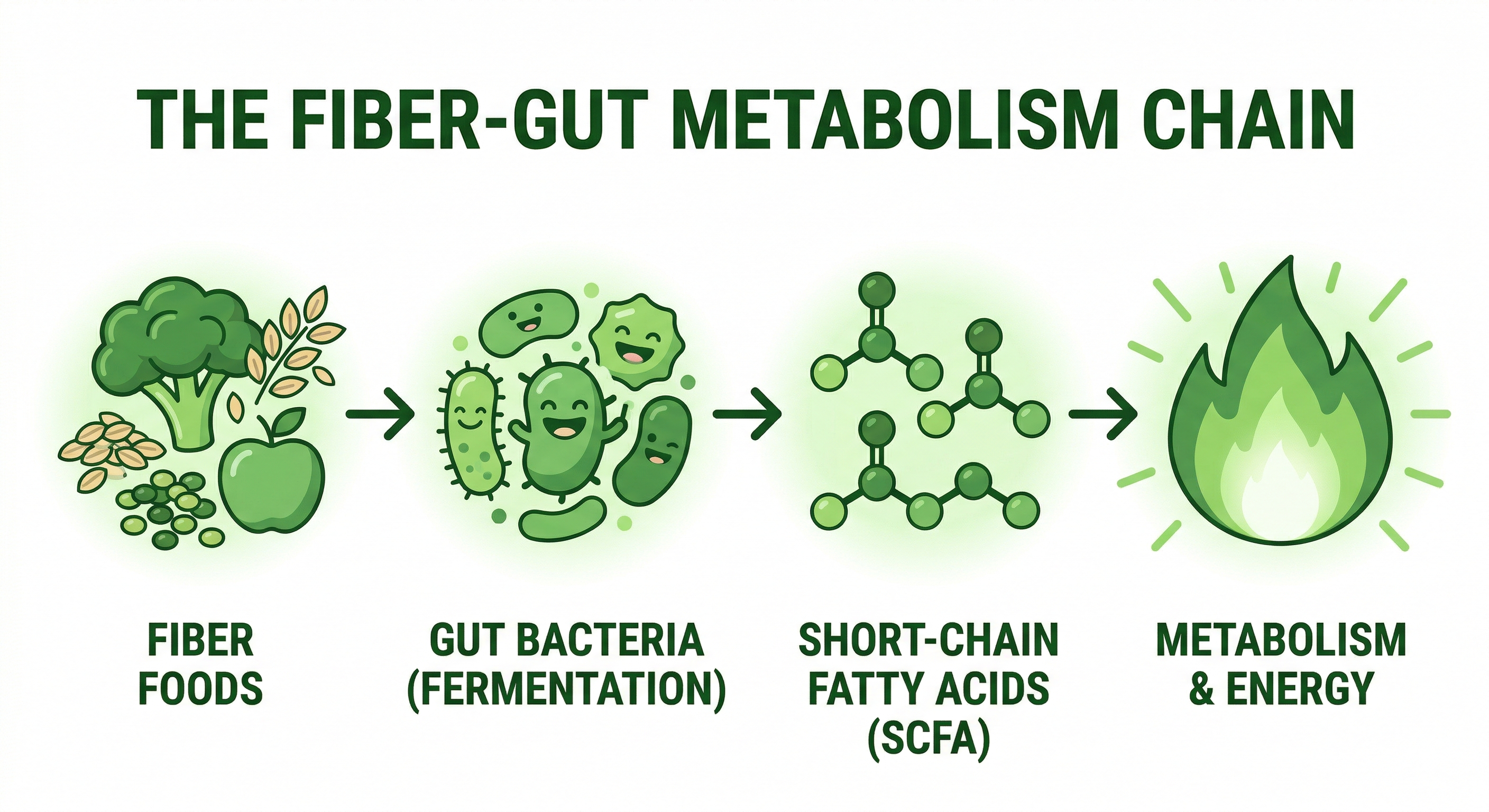
Here’s the chain that matters:
You eat fiber (the kind your body can’t digest directly)
That fiber reaches your gut bacteria, who can break it down
The bacteria produce short-chain fatty acids (SCFAs) as a byproduct
SCFAs signal your body to improve insulin sensitivity, reduce inflammation, and regulate appetite hormones
Result: better fat metabolism, less bloating, more stable energy after meals
When you don’t eat enough fiber, those gut bacteria don’t have much to work with — and the downstream effects on your metabolism are real. Low fiber intake is consistently linked to higher rates of metabolic syndrome, type 2 diabetes, and obesity.
What the Research Actually Shows
A few findings worth knowing:
People who eat more than 26 grams of fiber per day have an 18% lower risk of developing type 2 diabetes, according to research published in Diabetologia. That’s not a small number.
A 2026 ScienceDaily study found that a simple dietary shift toward more fiber significantly transformed gut microbiome composition in as little as two weeks — before any other lifestyle changes.
The USDA currently recommends 22–34 grams of fiber per day for adults. The average American gets about 15. Most Europeans aren’t doing much better.
New research is identifying specific gut bacteria (like CAG-170) that are consistently found in metabolically healthy people — and they thrive on fiber.
The science here isn’t speculative. Fiber is one of the most well-studied dietary components we have, and the metabolic benefits are consistent across dozens of large studies.
The Two Types of Fiber (and Why Both Matter)
Not all fiber works the same way — and understanding the difference helps you eat smarter, not just more:
Soluble Fiber
Dissolves in water and forms a gel in your gut. This is the stuff that slows digestion, blunts blood sugar spikes, and lowers LDL cholesterol. Found in oats, apples, legumes, and chia seeds. This is what most fiber supplements are made from.
Insoluble Fiber
Doesn’t dissolve — it adds bulk and keeps things moving. Great for gut motility and preventing constipation. Found in whole grains, nuts, and the skins of most vegetables and fruits.
You need both. A varied, whole-food diet naturally gives you both — which is why “eat more plants” remains one of the most evidence-backed pieces of nutrition advice in existence, despite being deeply unsexy.
The Best High-Fiber Foods for Metabolic Health
Here are the ones that actually move the needle — ranked by fiber content per serving and how practical they are to eat regularly:
FoodFiber per servingBonus metabolic benefitLentils (1 cup cooked)~16gHigh protein, low glycemic indexBlack beans (1 cup cooked)~15gResistant starch = natural GLP-1 stimulationChia seeds (2 tbsp)~10gOmega-3s + soluble fiber comboAvocado (1 medium)~10gHealthy fats + potassium for insulin functionOats (1 cup cooked)~4gBeta-glucan specifically lowers blood glucoseBroccoli (1 cup)~5gSulforaphane supports liver detox + metabolismPear (1 medium)~5.5gEasy snack, high in soluble fiberQuinoa (1 cup cooked)~5gComplete protein + fiber in one grain
What About Fiber Supplements?
Real talk: whole foods are better. Your gut bacteria want diversity — a psyllium husk capsule gives them one type of fiber, while a plate of lentils and roasted broccoli gives them dozens of different compounds to work with.
That said — supplements have a place. If your diet is genuinely fiber-poor and you’re working on fixing it, a good fiber supplement can help bridge the gap while you build better habits. Psyllium husk is the most researched option. Inulin and partially hydrolyzed guar gum are also solid.
What to avoid: anything with a lot of added sugar or artificial sweeteners — they undermine the exact gut bacteria you’re trying to feed.
🛒 If you want a fiber supplement worth adding to your routine, — clean ingredients, no fillers, and it actually dissolves properly.
How Much Is Actually Enough?
The official recommendation is 22–34 grams per day. The “fibermaxxing” crowd on TikTok sometimes pushes 50–60g, which is where it gets a bit extreme.
Here’s a sensible target: aim for 30–35 grams daily, coming mostly from whole foods. That’s enough to see real metabolic benefits without the bloating and digestive chaos that comes from going too fast, too hard.
One important note: increase your intake gradually. Going from 15g to 40g overnight is a bad time for everyone in your vicinity. Add 5g per week and drink more water. Your gut bacteria need time to adapt.
So Is Fibermaxxing Actually Worth Doing?
Yes — with one caveat. The core principle (eat more fiber from whole foods) is one of the most evidence-backed dietary changes you can make. The part that’s a bit much is the “extreme” framing — you don’t need to dump psyllium husk into every meal and document your gut journey on social media.
Just eat more plants. More beans, more vegetables, more whole grains. That’s it. The metabolic benefits — better insulin sensitivity, lower blood sugar variability, improved fat metabolism, less inflammation — follow naturally.
For once, the viral trend and the science are pointing in the same direction. That doesn’t happen often enough.
Start Here
If your diet is currently low in fiber, don’t overhaul everything at once. Pick one swap per week:
Week 1: Replace white rice with lentils or quinoa twice a week
Week 2: Add chia seeds to your morning yogurt or smoothie
Week 3: Eat a handful of nuts or a pear as your afternoon snack
Week 4: Add a cup of black beans to one meal per day
Four weeks from now, you’ll have added roughly 15–20 extra grams of fiber to your daily diet without making it feel like work. Your gut bacteria will notice before you do — and eventually, so will your metabolism.
Sources: Diabetologia, ScienceDaily (2026), USDA Dietary Guidelines 2020–2025, PMC Gut Microbiota Research, OpenPR Fibermaxxing Market Report (2026)
Frequently Asked Questions
What is fibermaxxing?
Fibermaxxing is the practice of intentionally maximizing dietary fiber intake — through vegetables, legumes, whole grains, and fruit — to support gut health, metabolic function, and satiety. The term gained traction on TikTok in 2023–2024 as a counterpoint to ultra-processed diets.
How much fiber should I eat per day?
The USDA recommends 25g for women and 38g for men per day. Most people consume around 15g. Research consistently shows that higher fiber intake — particularly from diverse plant sources — is associated with better gut microbiome diversity, lower inflammation, and reduced risk of metabolic disease.
Does fiber help with weight loss?
Fiber improves satiety (you feel fuller longer), slows glucose absorption (reduces blood sugar spikes and subsequent hunger), and feeds gut bacteria that produce metabolically beneficial compounds. Multiple meta-analyses show that increased fiber intake is associated with reduced calorie intake and modest but consistent weight loss.
Related Articles
- Fiber for Brain Fog: Why Fibermaxxing Works for Focus
- The Best Time to Eat for a Faster Metabolism
- What Metabolism Really Is (And Why Most Advice Fails)
- The Carb-Cooling Trick: How Cooling Rice and Pasta Actually Changes Your Blood Sugar
- Why Do I Get Brain Fog After Eating?
Sources
- Reynolds A et al. (2019). Carbohydrate quality and human health: a series of systematic reviews and meta-analyses. *The Lancet*.
- Dahl WJ & Stewart ML (2015). Position of the Academy of Nutrition and Dietetics: Health implications of dietary fiber. *Journal of the Academy of Nutrition and Dietetics*.