Why Am I Tired After Eating? (And What It Means)
3 min read
You eat a meal, expecting to feel energized… but instead, you feel like someone turned down the dimmer switch on your brain. Your focus goes foggy, your body feels heavy, and sometimes you could genuinely fall asleep at your desk. If you've ever thought: "Why the hell am I so tired after eating?" — you're definitely not alone. And it's not random. There's actual biology behind it. Let me explain what's really going on.
It Usually Comes Down to Blood Sugar
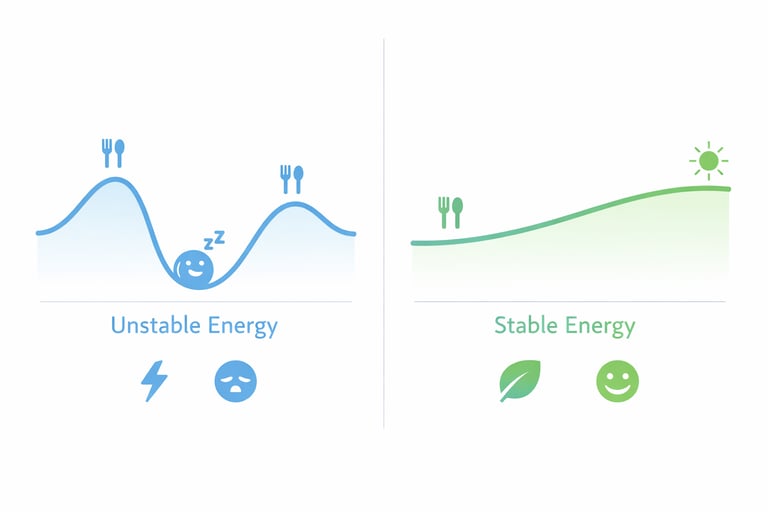
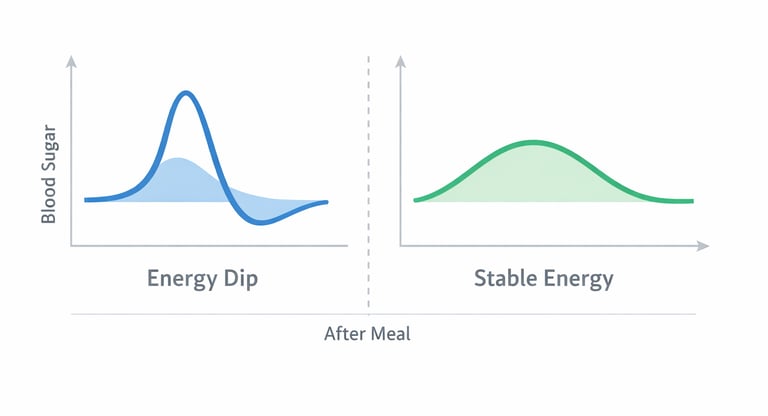
Here's what happens after you eat, especially carbs: Your blood sugar goes up, and your body releases insulin to move that sugar into your cells where it can actually be used. When this happens smoothly and gradually, you feel fine. But when your blood sugar spikes fast, it often crashes fast too. And those rapid ups and downs feel like exhaustion. This is basically what people call a carb crash — you get a quick burst of energy, then suddenly hit a wall. Your brain is extremely sensitive to these glucose swings, and even a small dip can make you feel unreasonably tired.
Digesting Food Actually Takes Energy
Here's something most people don't think about: digestion itself uses energy. After you eat a big meal — especially a heavy, calorie-dense one — your body redirects more blood flow toward your stomach to handle the work of breaking everything down. That shift in resources can temporarily make you feel less sharp and more sluggish. It's usually mild, but when you combine it with blood sugar chaos, it hits harder.
Carb-Heavy, Low-Protein Meals Make It Worse
Meals that are mostly refined carbs with little protein or fiber digest really quickly. Blood sugar shoots up, insulin kicks in hard, then energy drops just as fast. Protein slows this whole process down and helps you actually feel satisfied. This is why some breakfasts leave you feeling sharp and energized, while others have you barely keeping your eyes open by 10 AM.
Poor Sleep Makes Everything Worse
If you didn't sleep well last night, your body doesn't regulate blood sugar as efficiently. When you're sleep-deprived, your insulin sensitivity drops, meaning your body has to work harder to manage the food you just ate. Translation: worse energy swings and stronger post-meal fatigue. When your body is already running on fumes, adding a meal to the mix just amplifies the crash.
Stress Sneaks In and Makes It Harder
Stress messes with how your body handles blood sugar. If you've been stressed all day (or all week), your system is already dealing with unstable energy signals before you even sit down to eat. Then you add a carb-heavy meal on top of that, and the fatigue can hit like a truck. Your metabolism doesn't work in a vacuum — it's responding to your entire day: sleep, stress, activity, everything.
Is It Just a "Food Coma"?
There is a real phenomenon called postprandial somnolence, which is basically mild sleepiness after eating, and it's normal. But if you're feeling noticeably wiped out after meals, it's usually not just "food coma" — it's instability. The more your blood sugar swings around, the stronger the fatigue signal.
When to Actually Worry About It
Feeling a little tired after eating once in a while is totally normal. But if you're consistently exhausted after meals — especially if you're also experiencing shakiness, intense hunger right after eating, brain fog that won't lift, or dizziness — that might be a sign of blood sugar regulation issues, and it's worth talking to a professional about it.
How to Actually Feel Better After Eating
You don't need to go on some extreme diet or cut out entire food groups. Most people just need a few simple adjustments: Combine carbs with protein and fiber to slow everything down. Don't eat massive carb-heavy meals because bigger isn't always better. Take a short walk after eating — even 5-10 minutes helps. Get consistent sleep because this fixes more than you'd think. Lift weights regularly because muscle helps your body handle glucose way better. The goal isn't to demonize carbs — it's to stabilize your energy so you're not on a roller coaster all day. When blood sugar moves gradually instead of spiking and crashing, the fatigue disappears.
The Bottom Line
Feeling tired after eating doesn't mean your metabolism is broken. It usually just means your energy is shifting too quickly — like slamming on the brakes instead of coasting to a stop. Healthy metabolism is about flexibility, being able to handle food smoothly without dramatic swings. Support steady energy inputs, and your body responds with steady energy outputs. Simple as that.